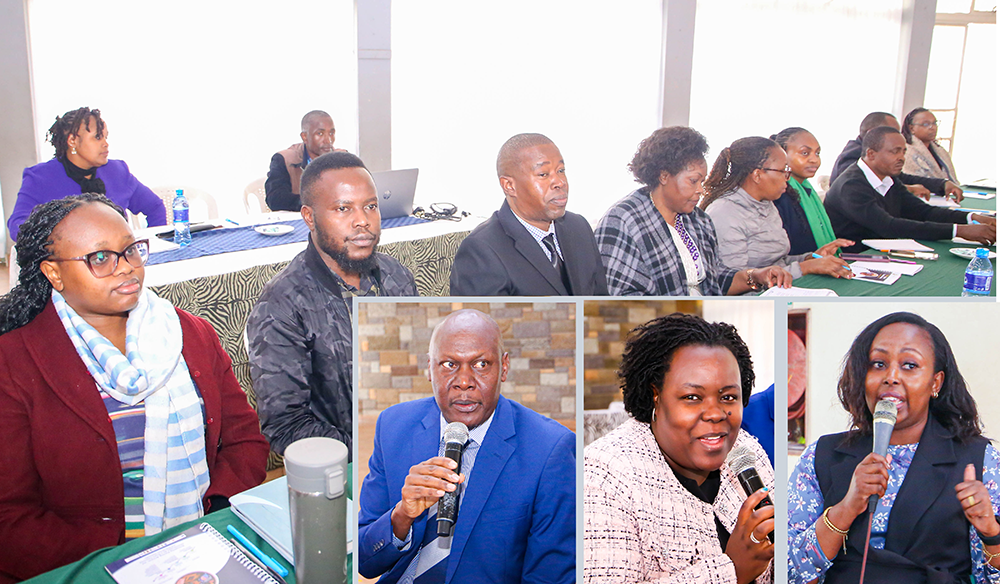
The Technical University of Kenya, on Thursday 17th June, 2026, trained staff in digital transformation. The Deputy Vice-Chancellor in charge of Research and Technology Development (RTD), Prof. Isaac Orina, opened the conference on behalf of the Vice-Chancellor Prof. Benedict Mutua. The conference themed, “Beyond Automation: Reimagining Teaching, Research and Administration for a Data-Driven University” examined ways in which the university can transform its operations from admissions of students, teaching, learning, research, procurement, human resource and many others.
The DVC thanked participants saying their attendance showed a shared commitment to shaping the future of the university and therefore ensuring that it remains relevant, competitive and impactful in an increasingly digital world.
Prof Orina noted that the most successful institutions are not merely digitising existing processes, but are fundamentally rethinking how they teach, conduct research, serve students and make decisions in the digital age.
The DVC explained that that TU-K had made notable progress in the digital journey. “We continue to prioritise investments in modern ICT infrastructure, have strengthened connectivity, soon implementing enterprises systems, expanded online learning capabilities, digitised key administrative processes and enhanced access to digital resource for teaching, learning, and research. These achievements provide a strong foundation upon which we can build.”
He reminded participants that the goal of the conference was transformation and challenged them to lay a foundation of a digitally-enabled data-driven university that is more responsive, efficient, innovative and better positioned to fulfill its mission.
“Identify opportunities rather than limitations, envision the university where data informs every strategic decision, where technology enhances human potential and where innovation becomes part of our institutional DNA.”
The conference was organised by the Director of TU-K ICT Prof. Salesio Kiuria and sponsored by Digital Africa, whose mandate is to promote the development of tech in Africa. He explained that the project of initiating/enhancing digital transformation in the universities has been going on in eight African Universities. Kenya is represented by TU-K and Strathmore.
He added that part of the project is training on Specific courses on soft skills to prepare for employability.
Pro. Kiura noted that the key tenets of Digital Transformation involve People, process and tTechnology.
TU-K Graduates Celebrated for their Technical Excellence
Senior ICT officer at the Ministry of Information, Communication and the Digital Economy Ms. Moloyce Esther thanked the university for holding such an event. Saying that that there was value in using technology.
She noted that the Ministry enjoys cordial working relationship with TU-K, since the University embraces technology, the main pillar in the current administration and economy.
She commended the University for producing the best technical skilled personnel, who serve the country and the region. She emphasised that technological discipline will put most education institutions in good state, to play their role in towards Vision 2030.
“Digital technologies improve performance. Science and technology need to be, great demand for what you people are doing, hands on. I will urge you to form collaboration in advancing digital sustainability.”
Expert urges digital culture shift
Ms Tabitha Ngugi, a digital transformation lead, SSA Google for Education, highlighted on how digital transformation in education technology, pedagogy and policy has effected changes in education sector.
She noted some elements of digital transformation in education, such as capacity building and culture, connectivity saying there should be clarity on what the institution wants to be done.
“Deep and coordinated shift in culture, workforce and technology enhance new educational and operating models that transforms institutional strategic direction and value proposition.”
She noted that, digital transformation in education is different from other areas. Therefore, challenged the academic staff and researchers to give open space to young minds, empower students to use Al in a proper way.
“Creativity transforms ideas, encourage youth, promote inclusivity. They have high expectations, let them learn about efficiencies, work, impact, outcomes, work plans, innovation, property rights, collaboration, among many others shape minds of people.”
On the need for automating processes, she urged the staff to practice way a head of the policy but put in mind various aspects such as governance, cyber security, information needs to be protected.
There were several presentations for instance; Navigating Academic Challenges for Innovation which called for planning, curriculum review, change approach among others.
She explained that the focus should be on students and competencies, understanding their knowledge (digital literacy, skills in critical thinking, attitudes, among others.
“Technology is revolving so fast, sensitise students, staff need to be trained to be more efficient. Communication is the key, learn to demisfy technology, and maximize on its use,” Ms Ngugi.
 Academic Calendar for Diploma and Undergraduate Students June – September Semester, 2026