The Department of Biochemistry and Biotechnology is transforming its Industry-Based Learning (IBL) programme by adopting a practical, research-driven approach through Course-based Undergraduate Research Experiences (CUREs).
The pilot programme, involving third and fourth-year students undertaking their six-week IBL placement within the University, is being implemented in preparation for the rollout of the Competency-Based Education (CBE) framework. The first cohort of CBE students, currently in Grade 10, is expected to join universities in 2029.
Unlike the traditional IBL model, the new learner-centred approach challenges students to identify real-world problems within their field of study and develop innovative, research-based solutions. It also brings together academic staff and industry partners to strengthen experiential learning and expose students to emerging scientific technologies.
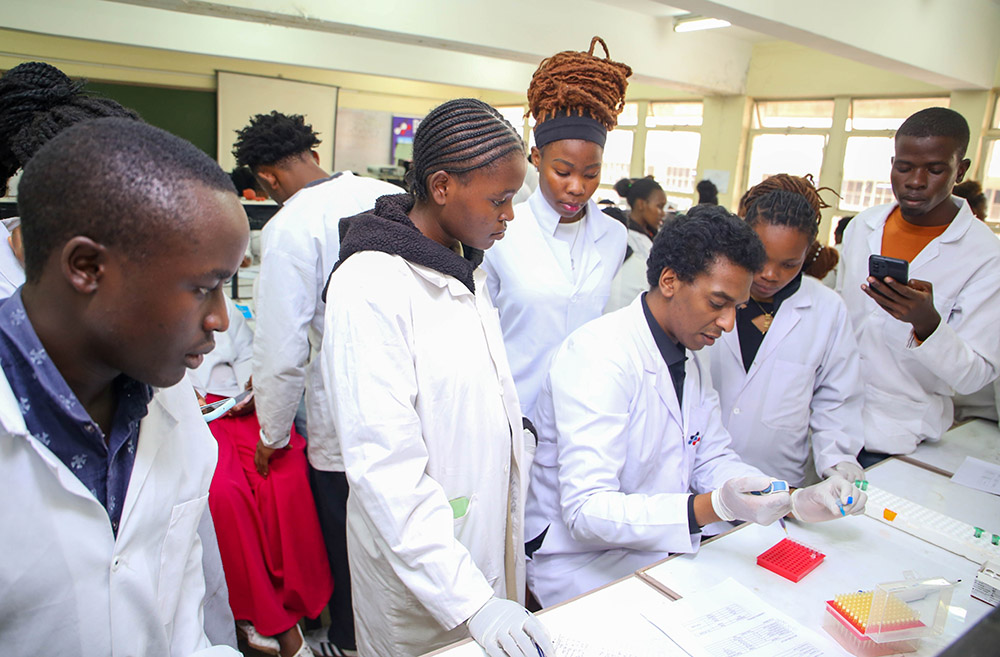
Throughout the programme, students receive hands-on training in laboratory biosafety and aseptic techniques, microbial isolation, culturing and characterisation, antimicrobial resistance (AMR) testing, DNA extraction, Polymerase Chain Reaction (PCR), and gel electrophoresis. The practical sessions are complemented by training in research design, scientific communication, and problem-solving skills that prepare students for careers in research, academia, and industry.
As part of the pilot programme, students identified food safety and antimicrobial resistance as a pressing public health challenge. They collected juice samples and other popular beverages, including Uji Power, from various locations across Nairobi and analysed them in the laboratory to determine the presence of potentially harmful bacteria.
According to Dr. James Munyao King’oo, one of the project leads, students were subsequently tasked with isolating bacteriophages from rivers, wastewater systems, sewage sites, slaughterhouses, and soil. These naturally-occurring viruses specifically infect and destroy harmful bacteria.
Bacteriophages are viruses that selectively infect bacteria and are increasingly being investigated worldwide, including in Kenya, as a promising alternative to antibiotics for combating antimicrobial resistance and drug-resistant bacterial infections.
The pilot programme is being implemented through a strategic collaboration between the TU-K, the Phage Hunters Training and Research Program (PHTRP), and REME-D Inc. The partnership combines academic expertise, advanced research training, and industry support to expose students to cutting-edge scientific techniques and technologies.
Through REME-D's support, students have gained access to advanced PCR technology, laboratory reagents, specialised equipment, and technical expertise for accurate pathogen detection. Dr. Osama Ismail and Juliet Muendi from REME-D provided hands-on training and technical support in molecular diagnostics and laboratory analysis.
Beyond laboratory training, the programme also focuses on professional development. Students receive mentorship in scientific communication, presentation skills, curriculum vitae (CV) writing, and scientific poster development, enhancing their readiness for careers in research, academia, biotechnology, and industry.
The initiative is further supported by researchers from the Phage Hunters Training and Research Program (PHTRP), including Aboka Ely, Elkanah Mudi, and Jonathan Mutinda, who are mentoring students in bacteriophage isolation and characterization.
At TU-K, the programme is spearheaded by faculty members from the Department of Biochemistry and Biotechnology, including Dr. King’oo, Dr. George Obiero, Dr. Kipchumba Biwott, Dr. Antony Kamau, and Dr. Kennedy Chepukosi.
The CUREs model represents a significant shift in undergraduate science education at TU-K by integrating teaching, research, and industry collaboration into a unified learning experience. By engaging students in authentic research that addresses real-world public health challenges, the initiative equips future graduates with practical laboratory competencies, critical thinking, innovation, and problem-solving skills needed to meet the evolving demands of the biotechnology, healthcare, and research sectors.
 Academic Calendar for Diploma and Undergraduate Students June – September Semester, 2026