Artificial Intelligence (AI) is now a critical field to explore in academia and research for the benefit of humanity and the environment. AI, unlike the earlier technologies is rapidly disrupting every sphere of humanity, and therefore demanding a wider approach to the opportunities, control and challenges.
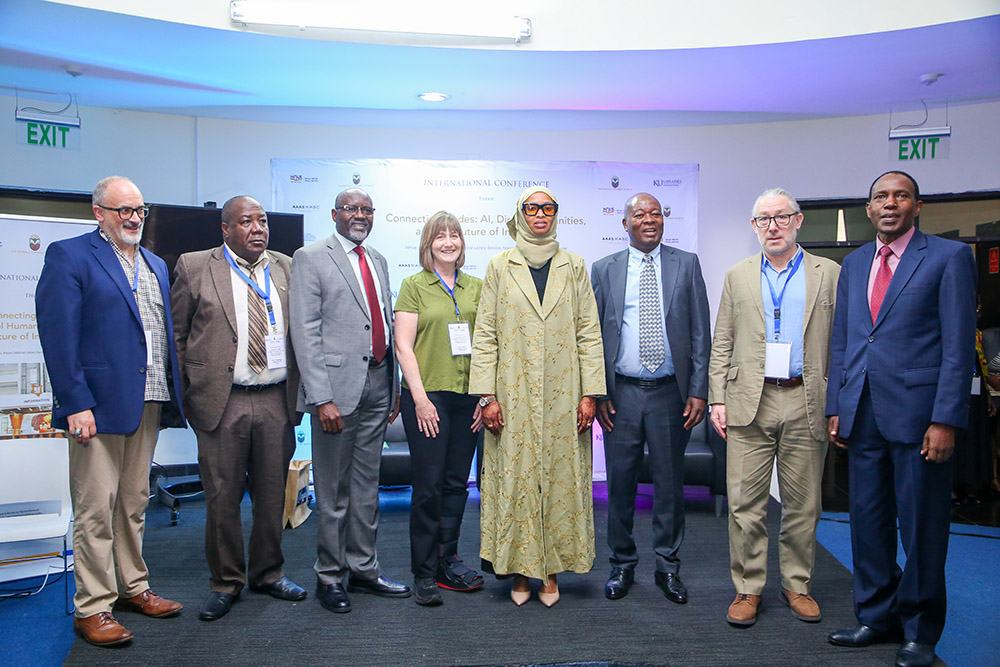
The Technical University of Kenya (TU-K), together with the University of Kansas Libraries and Kenya National Library Services (KNLS), organised a three-day International Conference themed; Connecting Codes; AI, Digital and Future of Information to brace for disruptive AI fronts.
The conference held between June 16th -18th 2026 at the KNLS Headquarters, brought together stakeholders in academia, information, library and cultural services, media and Legislature.
State Department of Culture and Heritage Principle Secretary, Ummi Bashir, who represented the Cabinet Secretary Ministry of Gender, Culture and Children Service, opened the conference.
Parliamentary Broadcasting and Library Committee Chairman, Daniel Nanok, gave a keynote speech, while TU-K DVC, Institutional Advancement and Enterprise, Prof. Paul Wambua, University of Kansas Dean of Libraries, Carol Smith among other guests made remarks.
The PS noted the importance of embracing the emerging technologies while protecting the country’s values, especially among vulnerable and marginalised groups such as children and the older generation.
“The Government of Kenya recognises that knowledge remains the foundation of national development. As a Ministry responsible for gender, culture, and children's services, we sit at a vital intersection of people, identity, values and inclusion.”
“Our role is to ensure that we embrace digital transformation. We do so in a way that is inclusive, ethical, and reflective of our national values. We are committed to ensuring that technology does not marginalise, but rather empowers all Kenyans.”
Mr. Nanok, who is also the Member of Parliament for Turkana West Constituency, assured the stakeholders that the legislature is aligned with the technological forgoing for the betterment of the society while ensuring communities are protected.
“We bear the collective burden of ensuring that technological progress remains fundamentally aligned with human dignity, cultural pluralism and the public good, as Chairperson of the Parliamentary Broadcasting and Library Committee of the National Assembly of Kenya, I evaluate these disruptions through legislative and governance lens.”
He added; “AI presents extraordinary opportunities for Kenya and the wider African continent and definitely the globe. It offers transformative pathways for education, health care, public service delivery and economic growth. For our libraries, archives and museums also, AI can revolutionise information discovery, automate routine metadata processes, lower barriers to multilingual access and fortify digital preservation. Yet, this rapid innovation introduces profound regulatory complexities.”
Prof. Wambua noted that the University was collaborating with various stakeholders locally and across the globe in several areas that includes technological transfer, research and joint knowledge sharing.
“While digital humanities preserve and amplify Africa's cultural and intellectual heritage, international partnerships, such as those between Kenyan institutions and the University of Kansas, further strengthen our capacity for innovation and shared learning.”
He also noted that the conference offered a unique opportunity not only to adopt emerging technologies, but to shape them in ways that reflect our languages, cultures, and knowledge systems.
Carol Smith, Dean of Libraries, Kansas University added, “Digital humanities invites collaboration across all disciplines, institutions, communities, and even countries, as we're seeing here today.”
While citing unethical use of AI like the misuse in assignments, projects, Prof. Constantine Nyamboga who represented KNLS, asked the students and other users to positively use AI as a tool.
“Users must remain technologically advanced, ethically grounded, socially inclusive, and relentlessly focused on empowering humanity through knowledge.”
 Orientation Programme - September 2026 Intake The Technical University of Kenya (TU-K) is welcoming new students and guardians to its September 2026 Orientation Programme, designed to ease the transition into university life by introducing campus academics, support services, regulations, and growth opportunities