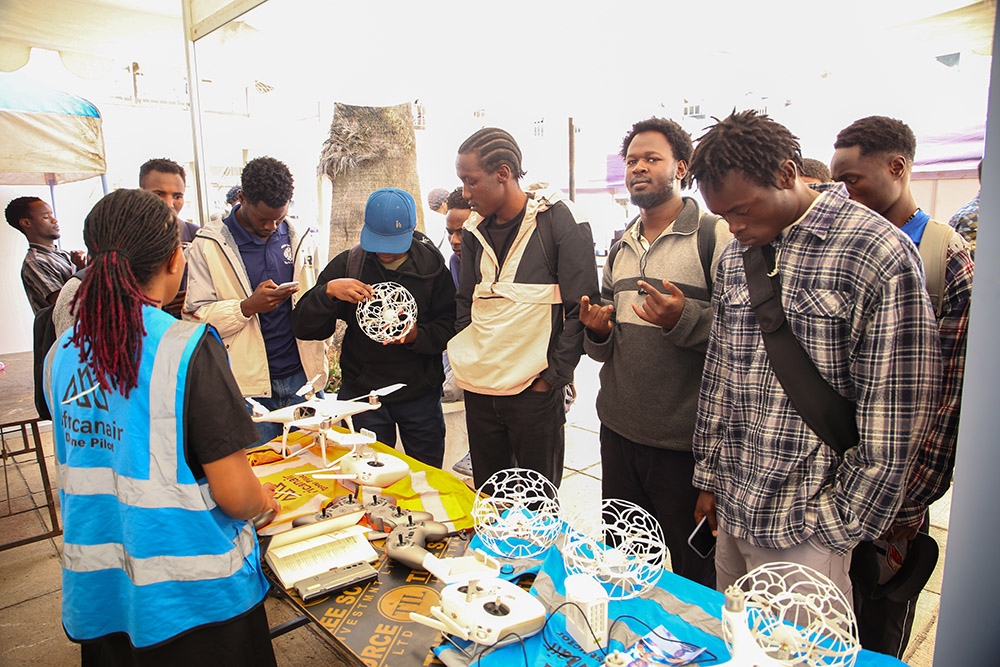
Various Key Note speakers continue to address students, academic staff, innovators, exhibitors and the industry players, who are attending the Technical University of Kenya Innovation week which is on its second day.
Cosmas Kemboi – the Chief Manager, Knowledge Management & Innovation at the Kenya Revenue Authority (KRA), speaking on behalf of the Commissioner General, talked about change, a story that began with a simple realisation: “Innovation was never meant to belong only to Silicon Valley, high-tech laboratories, or famous founders in glass towers. Innovation can begin anywhere, even inside an institution once known only for routine, rules, and paperwork.”
He told students that for a long time, many people believed innovation was not for people like them. It sounded like a word reserved for inventors, engineers, or people with large budgets and perfect conditions. But old problems never disappear by themselves. They survive until someone dares to solve them differently. That was the moment KRA decided to stop only managing old problems and started creating new solutions.
He challenged innovators to focus on Creativity and Innovation, urging them to use their imagination to create useful ideas. “Innovation is when those ideas are implemented and turned into value. One without the other is unfinished. A clever thought that never leaves the mind is only a dream; an action taken on a useful idea can change a community, a system, or even a country,” said he.
Moses Koyabe from MK Consulting, LLC Hastings, Michigan, USA, co-founder, ISTAE Comoros Aviation Academy, made a presentation titled: From Campus to Continent. He urged participants to ensure that their innovations remain sustainable. “Sustainable innovation is not just what we invent. It is what keeps working after the excitement fades. Resilient innovation is what still works when conditions change.“
He added that what fills the gap between a good idea and a working solution is not money, technology, or enthusiasm. He explained that the gap is filled by trust, discipline, presence, documentation, and people who keep going after the first excitement fades.
While addressing the issue of technology and artificial intelligence, he said, “The gap between a working prototype and a deployed standard is filled with human beings, not hardware.”
Prof. James Darkwa from the University of Johannesburg, gave the experience of an Academic in Commercializing Research Outputs. He used a case study of how South African Gold Industry funded the project, “New Uses of Gold” and challenged students to have a strategic planning for innovation management.
 Academic Calendar for Diploma and Undergraduate Students June – September Semester, 2026